Hydro Jetting vs. Snaking: What Really Clears Recurring Bullhead City Drain Clogs?
Struggling with slow drains that clog again every few months? Understand the mechanical difference between mechanical drain snaking and 4,000 PSI hydro jetting.
Few plumbing headaches are as frustrating as recurring drain blockages. You call a plumber or rent an auger to snake the line, water starts draining again, and you think the problem is resolved. Yet, two to four months later, the kitchen sink starts gurgling, wastewater rises into the shower basin, and the cycle repeats itself.
In Bullhead City, standard mechanical cable snaking often provides only a temporary fix. Our local municipal water chemistry—characterized by 15 to 22 grains per gallon of mineral hardness—interacts with cooking grease and desert sand to coat the inside of drain lines with rock-hard scale. To achieve a permanent solution, property owners need to understand the fundamental difference between mechanical snaking and high-pressure hydro jetting. At Rapid BC Plumbers, our professional plumber in Bullhead City, AZ team uses both technologies to clear blockages safely and effectively.
What is Drain Snaking (Mechanical Augering)?
Drain snaking, also called mechanical augering or cabling, is the traditional method used for clearing localized clogs. A motorized machine feeds a flexible steel cable into the drain pipe. At the end of the cable, an interchangeable cutting head (such as a corkscrew, spade head, or C-cutter) spins rapidly as it moves through the line.
- How It Works: When the spinning tip reaches an obstruction—such as a wad of hair, flushable wipes, or tree roots—it bores a hole through the center of the blockage or hooks the debris so the plumber can pull it back out through the cleanout.
- The Limitation: Snaking is designed to restore flow by punching a pathway through the obstruction. However, it does not clean the inner circumference of the pipe. Grease, soap scum, and mineral scale clinging to the pipe walls remain completely untouched. Within weeks, new waste catches on the sticky residue, causing the clog to reform.
What is Hydro Jetting?
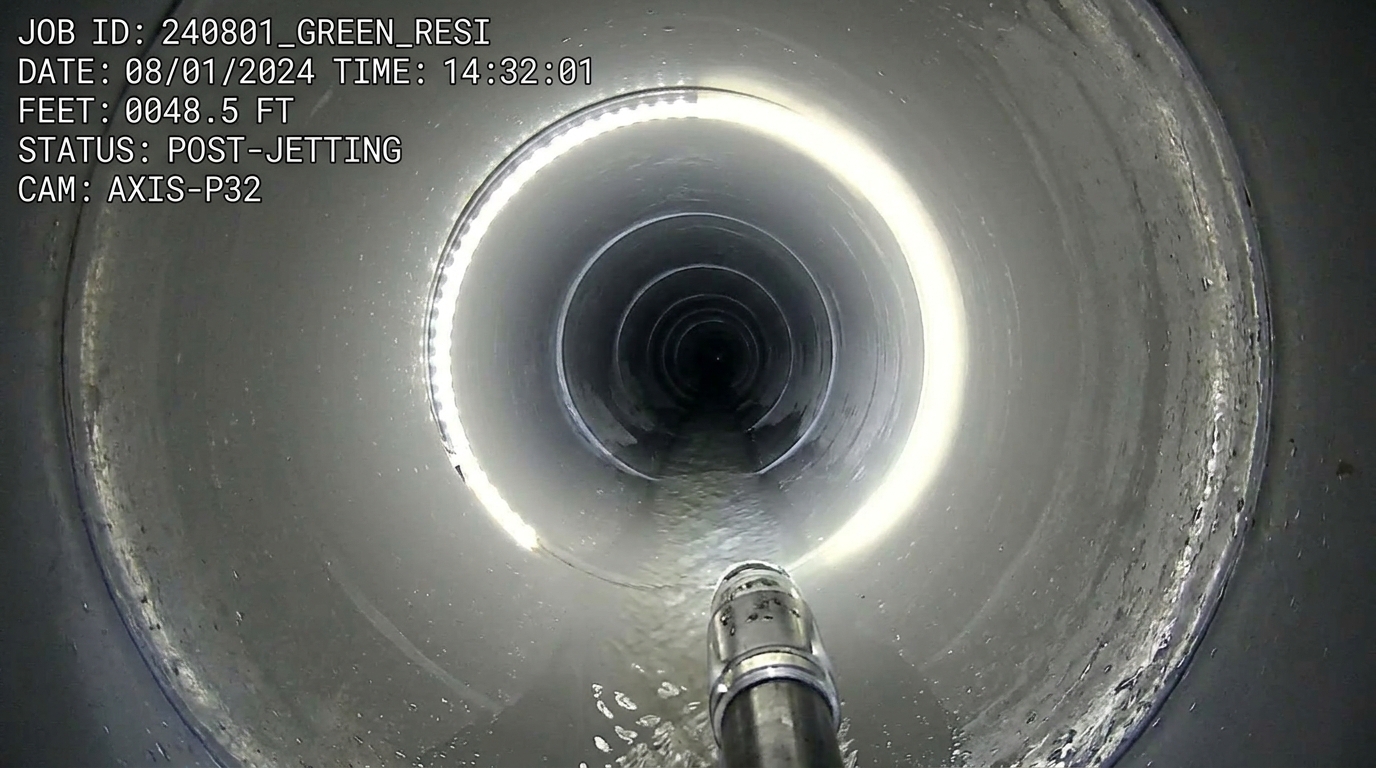
Hydro jetting is a commercial-grade, comprehensive drain cleaning method. Rather than relying on a mechanical cable, a hydro jetter uses a specialized high-pressure pump connected to a heavy-duty reinforced hose and precision-engineered stainless steel nozzles.
- How It Works: The jetter injects water at pressures ranging from 3,500 to 4,000 PSI with a flow rate of 8 to 18 gallons per minute. The nozzle features one or more forward-facing water jets that blast through obstructions like a laser, accompanied by 6 to 8 rearward-facing reverse jets. These reverse jets propel the hose down the pipe while scouring the entire 360-degree interior surface of the pipe wall.
- The Result: Hydro jetting doesn't just punch a hole—it emulsifies coagulated kitchen grease, washes away desert sand, slices through fibrous tree root intrusions, and scrubs hard calcium scale down to the bare pipe surface, restoring the line to near-original capacity.
The Bullhead City Problem: Calcite Scale & Kitchen Grease
Why do homes in Riviera, Sunridge Estates, and Desert Foothills experience such persistent clogs? The answer lies in local water chemistry:
When cooking oils, fats, and dishwashing soap flow down the drain, they come into contact with cold water and begin solidifying along the bottom of the pipe. In Bullhead City, this grease layer absorbs dissolved calcium and magnesium minerals from our hard water. Over time, the mixture chemically hardens into a dense concrete-like substance called "calcite scale."
A standard mechanical snake simply slides through soft grease or bounces off rock-hard calcite scale. A 4,000 PSI hydro jet, by contrast, shatters and flushes the calcified crust completely out to the city sewer main. For chronic kitchen sink and laundry blockages, review our specialized drain cleaning in Bullhead City.
When to Choose Snaking vs. Hydro Jetting
Choose Mechanical Snaking For:
- Simple, localized bathroom sink and shower hair clogs within 10 to 15 feet of the drain.
- Direct toilet obstructions caused by excess toilet paper or accidentally flushed foreign objects.
- Older, fragile, or partially collapsed clay or cast iron pipes that cannot tolerate high hydraulic pressures.
- Emergency middle-of-the-night flow restoration to prevent immediate overflow.
Choose Hydro Jetting For:
- Recurring main sewer lateral clogs that back up every 3 to 6 months.
- Heavy kitchen sink drain lines choked with solidified cooking grease, oil, and mineral scale.
- Invasive tree root intrusions where roots have formed thick wooden mats.
- Commercial restaurant kitchens, rental properties, and multi-family buildings requiring preventative maintenance.
- Preparing an aging sewer pipe for trenchless epoxy pipe relining or spot repairs via our sewer line repair team.
The Professional Standard: Pre-Inspection Camera First
Reputable plumbers never perform high-pressure hydro jetting blindly. If an underground sewer pipe is already cracked, offset, or structurally collapsed from shifting desert soil, firing 4,000 PSI water could erode the sub-base soil and cause complete pipe failure.
At Rapid BC Plumbers, we always perform a fiber-optic CCTV camera inspection before hydro jetting. This verifies that the line is structurally sound, reveals the exact composition of the blockage, and allows us to select the appropriate nozzle (such as a root-cutting spinner nozzle, penetrating nozzle, or grease-scouring head) for your specific pipe material.
Frequently Asked Questions
What is the difference between drain snaking and hydro jetting?
Drain snaking uses a motorized steel cable with a rotating tip to punch a hole through an obstruction to restore temporary drainage. Hydro jetting uses specialized nozzles firing forward and reverse water jets at up to 4,000 PSI to scour 100% of grease, mineral scale, and root fibers from the inner pipe walls.
Can hydro jetting damage old pipes in Bullhead City?
When performed by a licensed plumber who first conducts a CCTV camera inspection, hydro jetting is safe for sound cast iron, clay, and PVC pipes. However, if a pipe is already fractured or collapsed, high-pressure jetting could cause further damage, which is why pre-inspection is mandatory.
Why do drains keep clogging in Bullhead City?
Bullhead City water carries high calcium content (15-20+ gpg) that adheres to drain pipe walls, creating a rough calcite crust. Kitchen fats, cooking grease, and soap scum cling to this mineral scale, creating recurring blockages that standard drain cables merely punch through without cleaning.
How often should commercial or residential lines be hydro jetted?
Residential homes with recurring root intrusion or heavy grease buildup benefit from hydro jetting every 2 to 3 years. Restaurants and commercial kitchens should schedule preventative hydro jetting every 3 to 6 months to prevent grease trap and main line backups.