Sewer Backups in Bullhead City: Why Desert Tree Roots Target Clay and Cast Iron Laterals
Underground tree root intrusion is the leading cause of whole-home sewer backups in the Mohave Valley. Discover how HD camera inspections pinpoint damaged lines and how to clear roots permanently.
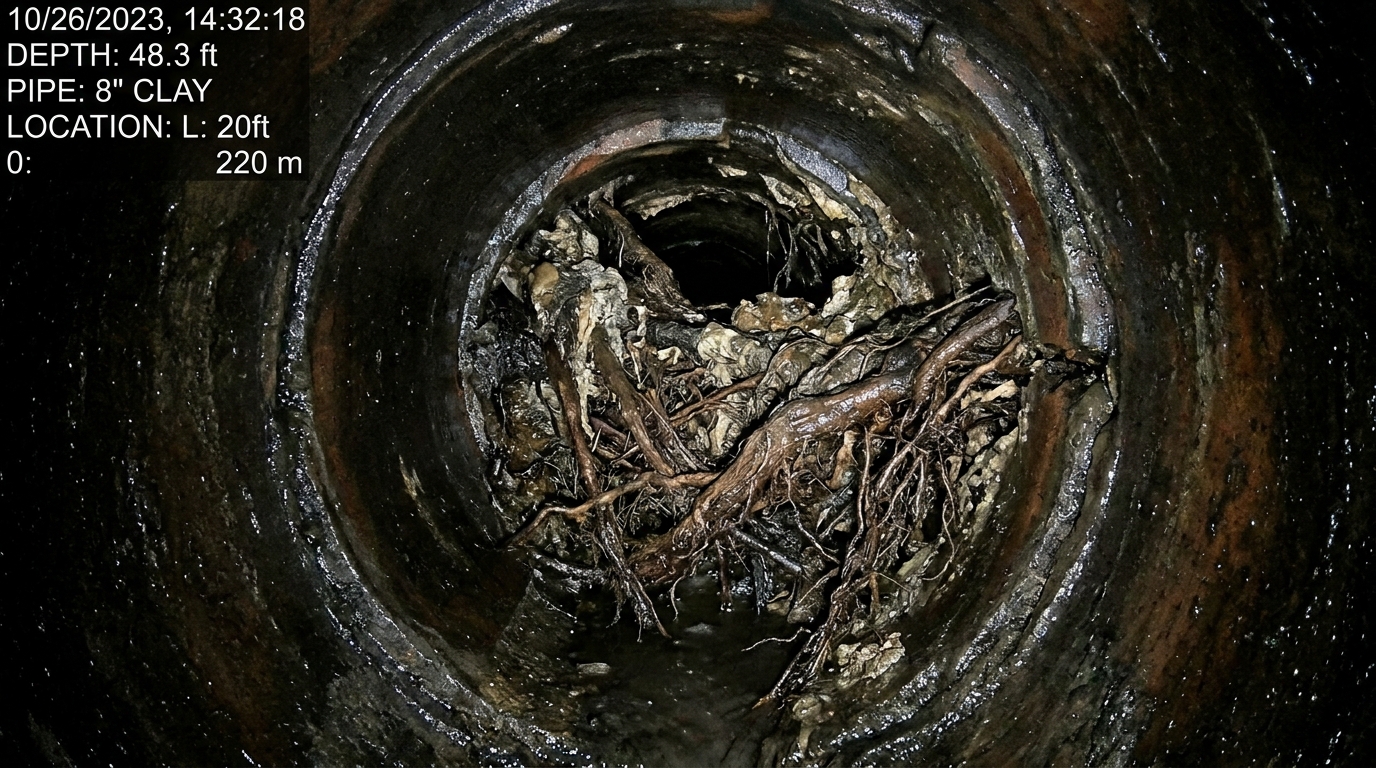
There is nothing quite as disruptive or alarming for a Bullhead City homeowner as raw sewage backing up into shower basins, bathtubs, and ground-floor toilets. When multiple drains bubble, gurgle, or overflow simultaneously, the problem is not a simple sink clog—it is a total obstruction in your main underground sewer lateral.
In our dry desert climate, the primary culprit behind recurring sewer backups is tree root intrusion. Seeking vital moisture and nutrients in arid soil, desert root systems aggressively target underground sewer pipes. If you are experiencing repeated backups, consulting a licensed Bullhead City sewer plumber with specialized CCTV inspection tools is the only way to diagnose the true condition of your line.
Why Desert Tree Roots Target Sewer Laterals
Bullhead City receives less than 6 inches of rainfall annually. In this arid environment, mature desert landscape trees—such as Mexican fan palms, date palms, mesquite trees, and drought-hardy oleander shrubs—develop extensive root networks extending 30 to 50 feet outward in search of groundwater.
Your home's underground sewer line carries a continuous flow of warm water, organic waste, and moisture vapor. Sewer pipes naturally breathe warm moisture through pipe joints, cleanout threads, and microscopic expansion cracks. Tree root tips can sense this moisture vapor through soil and grow toward it. A root hair as thin as a thread can penetrate a loose joint or hairline fracture in an older clay or cast iron sewer line. Once inside, the roots feed on organic nutrients, expanding into dense, wooden root masses that completely fill the pipe's internal diameter.
Vulnerable Pipe Materials in Bullhead City Neighborhoods
Depending on when your home was built, your private sewer lateral is made of one of three materials:
- Vitrified Clay Pipe (VCP): Common in older Downtown Bullhead City homes. Clay pipe was laid in short 3- to 4-foot sections connected by mortar or tar collars. Over decades, desert ground shifting causes joints to offset, creating open pathways for roots.
- Cast Iron: Frequently used in homes built through the 1970s and 1980s. While durable initially, cast iron corrodes internally from hydrogen sulfide gas, forming rough "scale" that catches toilet paper and snags entering root hairs.
- PVC (Schedule 40 / SDR-35): Used in modern subdivisions like Sunridge Estates and Desert Foothills. PVC features glued solvent-weld joints that are virtually impervious to roots, unless the pipe suffers physical shearing from caliche ground movement.
Early Warning Signs Before a Catastrophic Backup
Sewer lines rarely clog overnight. Roots grow over months, providing subtle warning signs before an emergency overflow occurs:
- Gurgling Toilets & Shower Drains: When running a washing machine or draining a kitchen sink, air displaced by trapped water is forced up through toilet bowls, causing gurgling sounds.
- Slow Drains Across the Entire Home: If only the master bathroom sink drains slowly, it's a localized clog. But if the kitchen, guest bath, and laundry room all drain sluggishly at once, the main lateral is restricted.
- Sewer Odors in the Yard: If roots have fractured an underground line, escaping sewage gases or lush, unusually green patches of grass and shrubs over the sewer trench indicate an active breach.
- Recurring Backups Every 3 to 6 Months: If you snake a drain only for it to clog again a few months later, roots have regrown inside the pipe.
For urgent overflow situations, our emergency dispatch team provides immediate 24/7 emergency plumbing services in Bullhead City.
The Game Changer: High-Definition CCTV Sewer Camera Inspections
Guessing where a sewer line is broken can lead to unnecessary, destructive trenching across your driveway or desert landscaping. At Rapid BC Plumbers, we never guess—we inspect using self-leveling, high-resolution fiber-optic video cameras.
Our technicians insert a waterproof camera head into your exterior sewer cleanout. As it travels down the line toward the municipal main in the street, the camera provides live, color video feedback:
- Exact Failure Location: Built-in digital footage counters display the exact distance from the cleanout to the blockage.
- Precision Sonde Radio Locating: The camera head emits a 512 Hz radio signal. Using an above-ground wand receiver, we pinpoint the exact surface spot and depth underground, eliminating guesswork.
- Structural Diagnosis: The high-definition footage reveals whether the line simply has root hair growth, or suffers from severe pipe belly sags, cracked clay hubs, or total structural collapse.
Clearing Roots vs. Permanent Sewer Repair
Once a sewer root problem is confirmed, homeowners have two tiers of solutions:
Tier 1: Mechanical Augering & Hydro Jetting (Maintenance)
A heavy-duty drain machine with expanding steel cutting blades slices through root masses, restoring flow immediately. For complete cleaning, high-pressure hydro-jetting scours the pipe walls with 4,000 PSI water, blasting out grease, scale, and root fibers. Learn more about our specialized drain cleaning in Bullhead City.
Tier 2: Permanent Pipe Replacement or Spot Repair
Because roots will always regrow through an unsealed crack, severe structural fractures require permanent repair. We install heavy-duty, root-proof Schedule 40 PVC cleanouts and replace collapsed sewer sections to give homeowners lasting peace of mind. Review our complete sewer line repair and replacement services to explore durable options.
Frequently Asked Questions
Why do tree roots grow inside sewer pipes in Bullhead City?
Bullhead City's arid desert environment forces drought-stressed trees (such as date palms, fan palms, mesquites, and oleanders) to seek deep moisture. Underground sewer laterals naturally vent warm, nutrient-rich moisture vapor through tiny pipe joints, attracting root tips that squeeze into hair-thin cracks.
Can chemical root killers dissolve sewer root blockages?
Chemical root killers only burn off tiny feeder root tips in standing water; they cannot clear dense, wood-like root masses that choke pipes. Heavy blockages require mechanical cutting with steel root augers or high-pressure hydro jetting, followed by camera inspection.
What is an HD sewer camera inspection?
A sewer camera inspection uses a fiber-optic, self-leveling color video camera mounted on a flexible push-rod. It travels down your private sewer lateral, broadcasting live footage to locate the exact depth and footage of root intrusions, bellies, or collapsed clay joints.
Who is responsible for the sewer line in Bullhead City?
The homeowner is legally responsible for the entire private sewer lateral from the house up to the connection at the municipal sewer main in the street or easement.