How Hard Water Destroys Bullhead City Plumbing (And How to Protect Your Home)
From rock-hard calcium scaling inside water heaters to seized faucet cartridges, learn how Bullhead City's 15-20+ gpg mineral levels quietly damage residential plumbing systems—and the proven solutions local homeowners use to stop it.
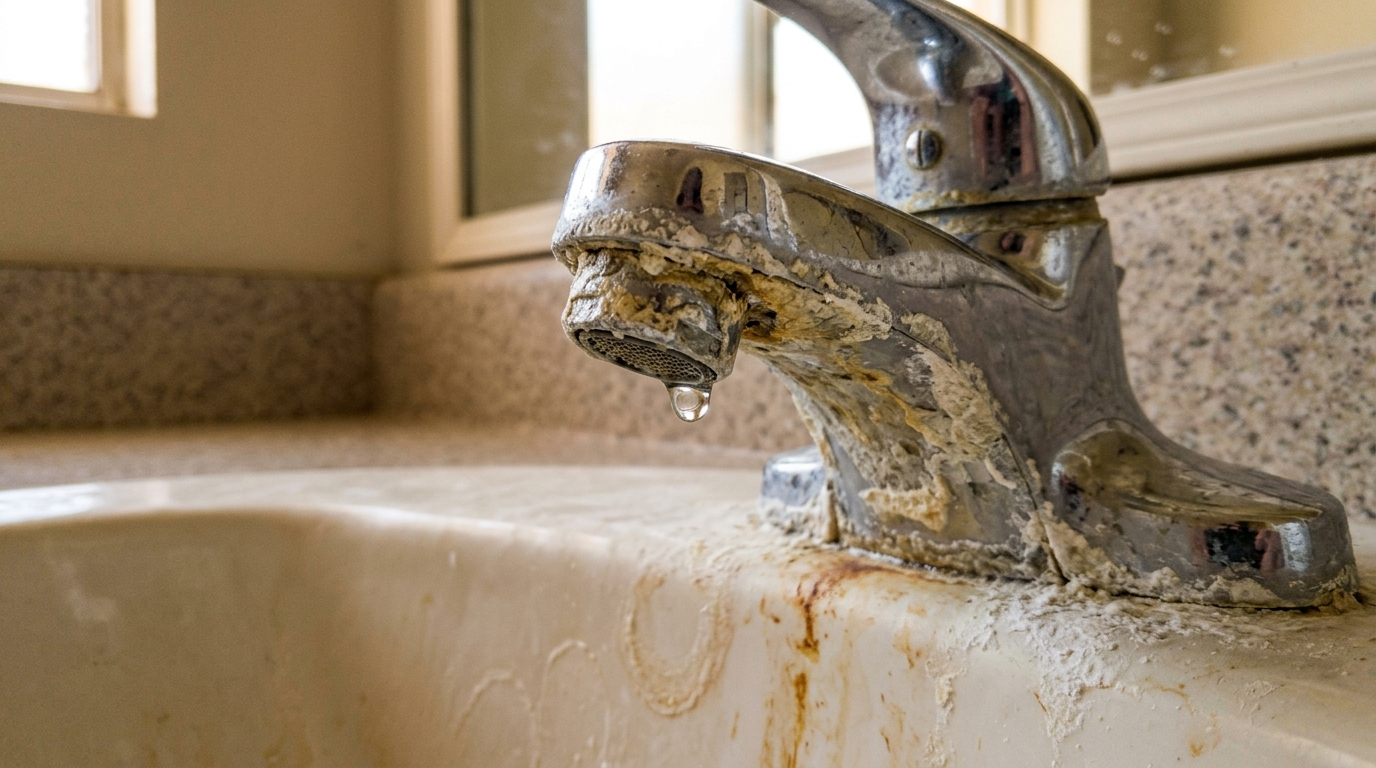
If you live anywhere along the Colorado River valley, you are familiar with the white crust that rings sink faucets, clouds glassware, and turns shower doors opaque. What many homeowners do not realize, however, is that what you see on the surface is only a tiny fraction of the calcium and magnesium deposits accumulating inside your walls, pipes, and appliances. When left unchecked, hard water is the single most destructive force affecting residential plumbing throughout Mohave County.
At Rapid BC Plumbers, our experienced plumber in Bullhead City team inspects hundreds of homes each year where expensive water heaters, designer fixtures, and main supply lines suffered premature mechanical failure directly linked to extreme mineral scaling. Here is a comprehensive look at how hard water damages your home's infrastructure and the proactive steps you can take to safeguard your plumbing investment.
How Hard is Bullhead City Water?
Water hardness is measured in grains per gallon (gpg) or parts per million (ppm). According to standards published by the Water Quality Association (WQA) and the U.S. Geological Survey (USGS):
- 0 to 3.5 gpg: Soft to slightly hard
- 3.5 to 7.0 gpg: Moderately hard
- 7.0 to 10.5 gpg: Hard
- 10.5+ gpg: Extremely hard
Municipal water supplied across Bullhead City, Riviera, and Desert Foothills drawn from groundwater aquifers along the Colorado River basin routinely tests between 15 and 22 grains per gallon (over 250 to 375 ppm). That places Bullhead City water deep into the "extremely hard" classification.
Every single gallon of water that flows into your home carries microscopic, dissolved limestone (calcium carbonate) and magnesium sulfate. As this water is heated, depressurized, or allowed to evaporate, these minerals immediately crystallize into rock-hard calcite scale.
1. Water Heater Suffocation & Early Failure
Nowhere is hard water more destructive than inside your water heater. Whether you operate a conventional 40- or 50-gallon storage tank or a modern on-demand tankless system, heat accelerates mineral precipitation.
Inside a standard gas or electric tank, calcium crystals precipitate out of solution and settle on the tank floor. Within two to three years of unmaintained desert operation, this sediment layer can grow 4 to 8 inches deep. The consequences are immediate and severe:
- Thermal Insulation & Overheating: The calcified sediment creates an insulating blanket between the bottom burner flame and the water. The gas burner must fire longer and hotter to heat through the rock, causing excessive thermal stress, tank floor fatigue, and eventual tank rupture.
- Kettling Sounds: Water trapped underneath the sediment layer boils into steam bubbles that pop violently through the rock crust, creating loud knocking, banging, or rumbling noises known as "kettling."
- Skyrocketing Energy Bills: Even a 3/8-inch layer of scale increases water heating energy consumption by upwards of 25% to 30%, adding hundreds of dollars to annual utility costs.
For tankless units, high mineral content quickly chokes the narrow copper heat exchanger tubes. Without regular descaling, scale restricts water flow and triggers thermal error codes. If your system is banging or struggling to keep up, learn more about our dedicated water heater installation and repair services to flush and restore your unit.
2. Faucet Cartridge Seizure & Silent Leaks
Modern plumbing fixtures rely on precision-machined ceramic discs and flexible neoprene O-rings to control water flow and temperature. When calcium scale builds up inside the valve body, it behaves like fine-grit sandpaper against these moving components.
Over time, the friction tears rubber seals and scores the ultra-flat polished surface of ceramic discs. This causes handles to become stiff, squeaky, and eventually locked in place. Homeowners often respond by forcing or overtightening the handle, which shears the internal brass stem or strips the handle splines.
Furthermore, mineral crust clogs tiny aerator screens and showerhead nozzles. This creates excessive hydraulic backpressure that forces pressurized water past worn stem packings, causing water to pool invisibly around the faucet base and rot under-sink MDF cabinetry. If you are noticing persistent drips or locked handles, review our guide to professional leaky faucet repair in Bullhead City for same-day OEM cartridge replacement.
3. Pipe Constriction & Galvanic Corrosion
In older Bullhead City neighborhoods such as Downtown and parts of Riviera, homes constructed with galvanized steel or early copper piping face severe internal occlusion. Similar to plaque accumulating inside human arteries, calcium scale binds with copper oxides and rust, slowly narrowing the internal diameter of water supply pipes.
As the pipe bore shrinks from 3/4-inch down to less than 3/8-inch, household water volume plummets. You might notice that turning on a washing machine causes the shower pressure in the master bathroom to drop to a trickle. In severe cases, the chemical interaction between dissolved minerals and acidic copper causes pinhole leaks behind drywall. Homeowners facing chronic pressure loss or hidden leaks often require modern PEX-A repiping via our pipe replacement and repair specialists.
4. Pressure Reducing Valve (PRV) & Appliance Failure
Bullhead City's hilly desert terrain necessitates municipal water supply pressures that frequently surge between 80 and 110+ PSI. To protect residential fixtures, homes are equipped with a mechanical Pressure Reducing Valve (PRV) near the main shutoff.
Unfortunately, PRVs are highly vulnerable to hard water mineral binding. Calcium scale cakes onto the internal stainless steel spring, adjustment screw, and rubber diaphragm. When the valve freezes open, high municipal pressure surges freely through the house, rupturing washing machine solenoid valves, ice maker lines, and toilet fill valves. We recommend annual pressure testing with trusted plumbers in Bullhead City, AZ to verify that your PRV is delivering a safe 50 to 65 PSI.
Proven Solutions to Protect Your Bullhead City Home
While you cannot change the mineral content of the municipal water supply, you can stop hard water from destroying your plumbing by implementing three proven safeguards:
- Install an Ion-Exchange Whole-Home Water Softener: A properly sized water softener is the gold standard for desert homes. By replacing calcium and magnesium with soft ions via high-capacity resin beads, a softener stops 100% of scale formation throughout every pipe, fixture, and appliance in the home.
- Schedule Annual Water Heater Descaling: Tank heaters should be drained and sediment-flushed every 6 to 12 months. Tankless units must undergo an annual recirculating flush with food-grade descaling solution to dissolve limescale from the heating core.
- Clean Aerators & Showerheads with Vinegar: Remove aerator screens every 6 months and soak them in warm distilled white vinegar for 30 minutes to dissolve mineral crusts and preserve factory water flow.
Frequently Asked Questions
How hard is the tap water in Bullhead City, AZ?
Municipal tap water in Bullhead City sourced from the Colorado River aquifer averages between 15 and 22 grains per gallon (gpg), or over 250 to 350 parts per million (ppm). The US Geological Survey classifies water above 10.5 gpg as 'extremely hard'.
How does hard water damage water heaters in Bullhead City?
When hard water is heated above 120°F, dissolved calcium and magnesium precipitate out of solution, settling at the bottom of tank heaters as rock-hard calcified scale. This insulates water from the burner or elements, causing overheating, loud rumbling sounds, higher gas or electric bills, and tank corrosion.
Does a whole-home water softener stop plumbing damage in Bullhead City?
Yes. An ion-exchange water softener replaces calcium and magnesium minerals with sodium or potassium ions, stopping scale formation on water heater elements, faucet cartridges, showerheads, and copper piping.
How often should I flush my water heater in Bullhead City?
Due to local mineral levels, water heaters in Bullhead City should be drained, flushed, and descaled every 6 to 12 months. Tankless units must undergo an annual recirculating vinegar or food-grade descaler flush to prevent heating core blockage.